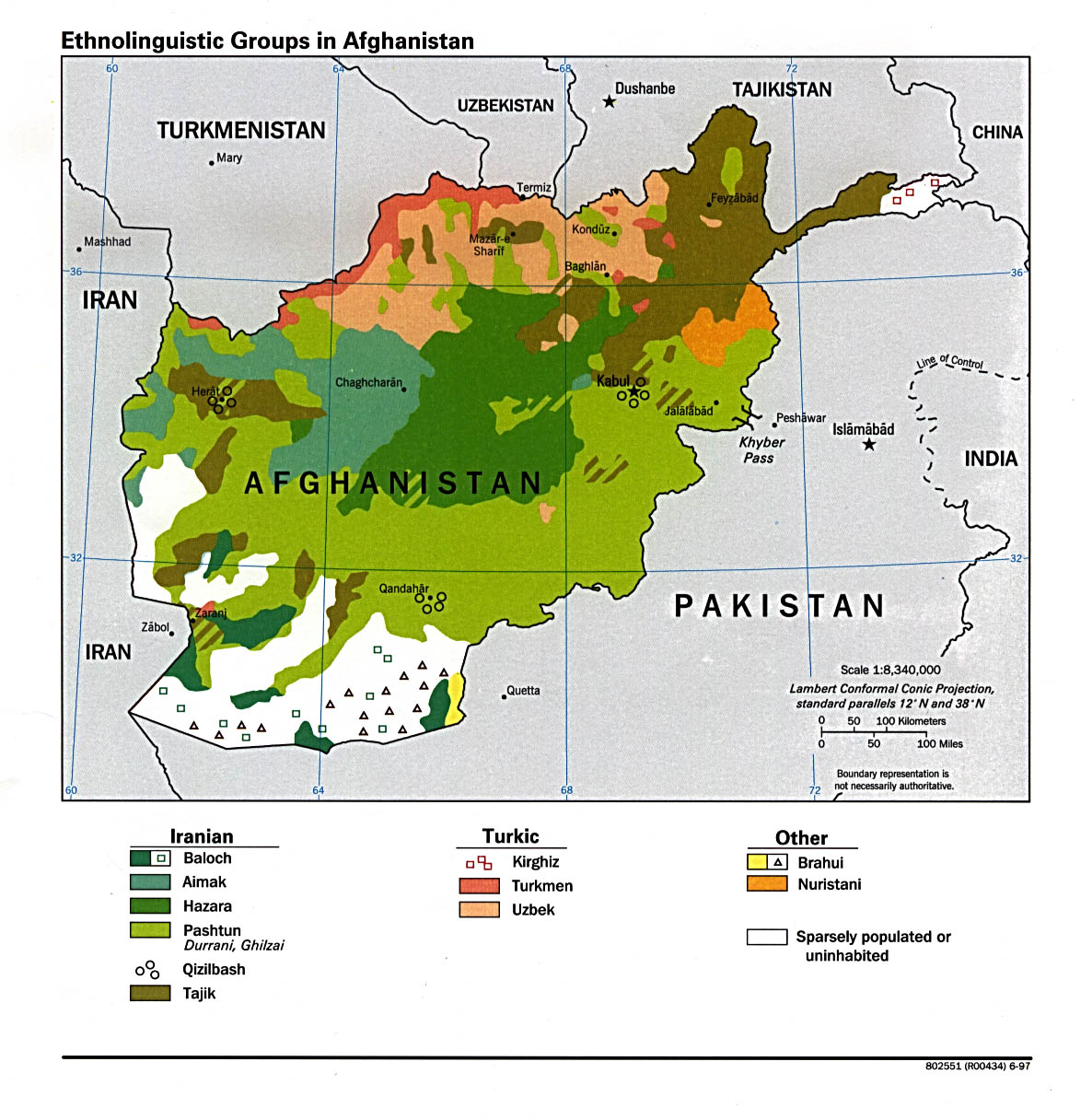
The Tirahi are a small Indo-Aryan people living primarily in eastern Afghanistan, especially in Nangarhar Province southeast of Jalalabad near the Khyber Pass. Historically, the Tirahi originally lived in the Tirah region of what is now northwestern Pakistan before being displaced centuries ago by expanding Pashtun tribes, especially the Afridis. After this displacement, many Tirahi families settled in eastern Afghanistan where they gradually became surrounded by Pashto-speaking populations.
The Tirahi language is one of the rarest and most endangered Indo-Aryan languages in Afghanistan. Linguists classify it within the Dardic branch of Indo-Aryan languages, related in some ways to Kohistani, Kashmiri, and Shina languages. Today, only a very small number of elderly speakers still speak Tirahi fluently, while most younger Tirahi have shifted almost entirely to Pashto. Because of this language shift, Tirahi is considered nearly extinct.
Historically, the Tirahi were part of the broader cultural world of eastern Afghanistan and the mountain regions bordering present-day Pakistan. Their isolation and later displacement helped preserve some unique linguistic features, but centuries of assimilation into Pashtun society weakened their separate ethnic identity. Much of their history survives mainly through oral tradition and scattered historical references rather than extensive written records.
Most Tirahi today live similarly to neighboring rural Pashtun communities in eastern Afghanistan. Agriculture remains important, with families cultivating wheat, corn, vegetables, and fruit where irrigation and land conditions allow. Some families also raise goats, sheep, or cattle for food and supplemental income. Economic survival in Nangarhar often depends on a mixture of farming, labor work, small trade, and seasonal migration.
Village life centers around extended family relationships, clan loyalty, and traditional social structures common throughout eastern Afghanistan. Hospitality, honor, and respect for elders are highly valued. Homes are commonly built from mud brick or stone using local materials suited to the dry climate and mountainous terrain. Oral storytelling and tribal memory remain important for preserving cultural identity among older generations.
Most Tirahi are now culturally close to surrounding Pashtun communities because of long interaction and assimilation. Pashto dominates public life, trade, education, and religion. Younger generations often identify more closely with wider Pashtun society than with a distinct Tirahi identity. This assimilation has contributed greatly to the decline of the Tirahi language and older traditions.
Life in eastern Afghanistan remains difficult because of poverty, political instability, weak infrastructure, and years of conflict. Many communities struggle with limited healthcare, poor educational access, unemployment, and insecurity. Economic opportunities are limited, especially in rural areas near the Pakistan border.
The Tirahi are Sunni Muslims, and Islam shapes nearly every aspect of family and community life. Religious practices commonly include daily prayer, fasting during Ramadan, mosque participation, and observance of Islamic customs connected to marriage, burial, and social life. Islamic identity is deeply woven into both Tirahi and broader Pashtun culture.
Alongside formal Islamic belief, many people in rural eastern Afghanistan continue to hold traditional folk beliefs involving spirits, curses, blessings, sacred objects, or supernatural protection. Charms and amulets are sometimes used for protection against evil influences or illness. Fear of unseen spiritual forces can influence daily decisions and community practices, creating a syncretistic religious environment.
Very few Tirahi have had meaningful exposure to biblical Christianity. Christianity is often viewed as foreign and socially unacceptable within Afghan Muslim society. Strong religious pressure, tribal identity, and regional instability make open gospel witness extremely difficult. The Tirahi need to hear clearly that forgiveness of sins and reconciliation with God come through Jesus Christ alone rather than through religious rituals, ethnic identity, or human effort.
The Tirahi remain largely unreached with the gospel, and there are extremely few known believers among them. Their small population, cultural assimilation into Pashtun society, and endangered language make focused ministry difficult. Faithful Christian workers willing to build long-term relationships with humility, wisdom, and cultural sensitivity are greatly needed.
One major need is language preservation. The Tirahi language is close to disappearing entirely as younger generations continue shifting toward Pashto. Any gospel outreach specifically connected to Tirahi identity would likely require oral communication, audio resources, and careful linguistic preservation efforts.
Practical needs are also significant. Communities in eastern Afghanistan face poverty, insecurity, weak healthcare systems, limited educational opportunities, and economic hardship after decades of war and instability. Rural families often struggle with unemployment, damaged infrastructure, and uncertain access to basic services. Compassionate ministry addressing both physical and spiritual needs could help demonstrate the love of Christ in meaningful ways.
The Tirahi need Scripture resources, discipleship materials, and gospel teaching communicated in culturally understandable forms. Audio Scripture and oral Bible storytelling may be especially important because of low literacy and the near disappearance of the Tirahi language itself. Any believers among them would need encouragement, biblical training, and discreet fellowship support because of strong social pressure against conversion.
Pray that the Tirahi people will hear a clear presentation of the gospel and place their faith in Jesus Christ for salvation.
Pray that God will raise up faithful Christian workers who are willing to serve among the Tirahi with wisdom, humility, perseverance, and genuine love.
Pray that the Tirahi people will be adopted through the People Group Adoption program so that churches and believers will commit to sustained prayer and future gospel outreach among them.
Pray that any believers among the Tirahi will grow strong in biblical truth and wisely share the hope of Christ with their families and surrounding communities.
Scripture Prayers for the Tirahi in Afghanistan.
https://en.wikipedia.org/wiki/Tirahi_language
https://en.wikipedia.org/wiki/Tirahi
https://www.jstor.org/stable/25220760
https://www.jstor.org/stable/25220761
https://historyofpashtuns.blogspot.com/2016/03/tirahis.html
https://www.ethnologue.com/language/tra/
| Profile Source: Joshua Project |